

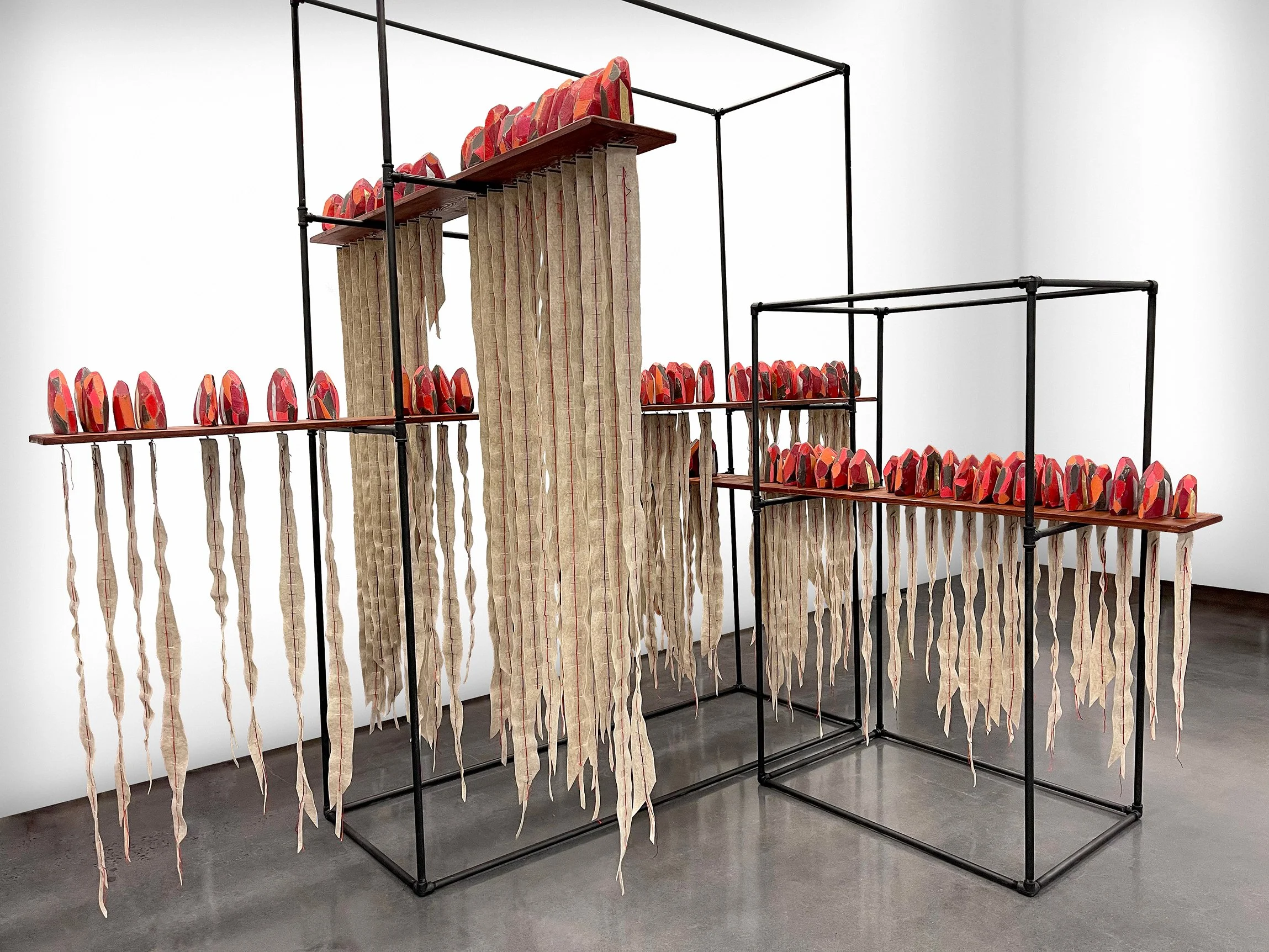
Esther and Her Work: Women and Incarceration
2021 (updated 2026)
Work data, polyurethane, metal pipes, fiber, wood
96 x 96 x 72 inches
Esther’s story
Esther’s paid and unpaid labor hours are spent connecting with people in her communities and advocating for issues that will increase their health, happiness, and prosperity. Esther’s paid job is with an environmental justice nonprofit where she fights locally, regionally, and statewide for people’s rights to clean air, land, and water. Her unpaid work hours are spent similarly – reaching out to people and organizations with common needs or interests and finding out how she can help.
One volunteer position (of many) near to Esther’s heart is support and advocacy for women with incarcerated loved ones through Essie Justice Group. The U.S. has, by far, the highest incarceration rate of any country in the world with 2.1 million inmates.¹ In fact, 25% of women and nearly 50% of Black women in the U.S. have a family member in prison.² The trauma caused by mass incarceration falls heavy on the shoulders of women left at home to care for their families. Lost income, in addition to the costs of supporting a loved one in prison can drive families into poverty.³
In Esther’s sculpture, roots reach down to connect with neighbors, friends, and ancestors, and the fruits of her caring efforts burst forth. Gold forms indicate an hour (or half hour) Esther spent on paid labor. Silver forms indicate time spent on unpaid labor, most often volunteering. Spaces in the matrix are times when she was doing anything other than working.
¹ Statista.com ² Essie Justice Group
³ socialwork.uic.edu
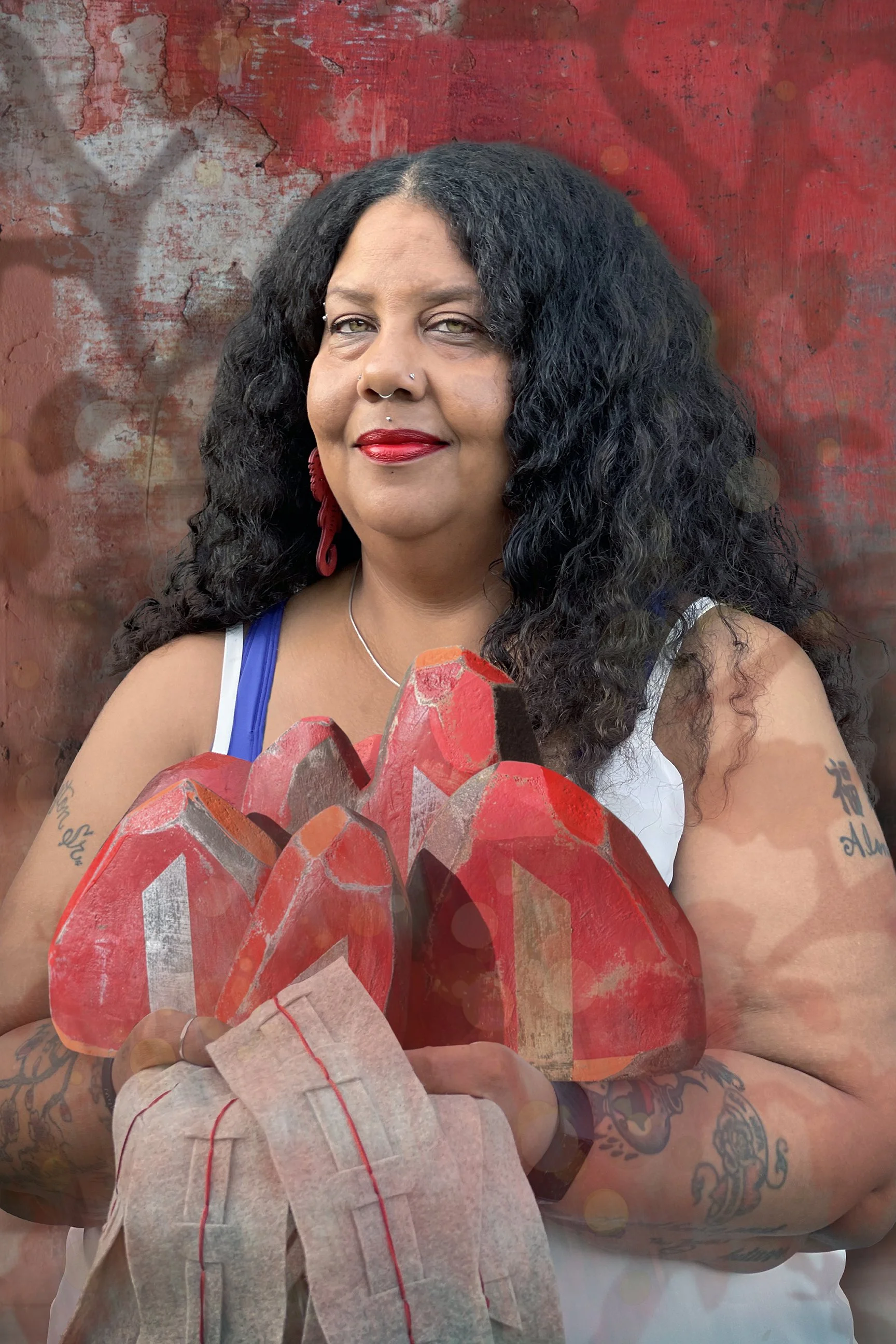
Esther and Her Work
2021
Archival pigment print
Edition of 3
36 x 24 inches
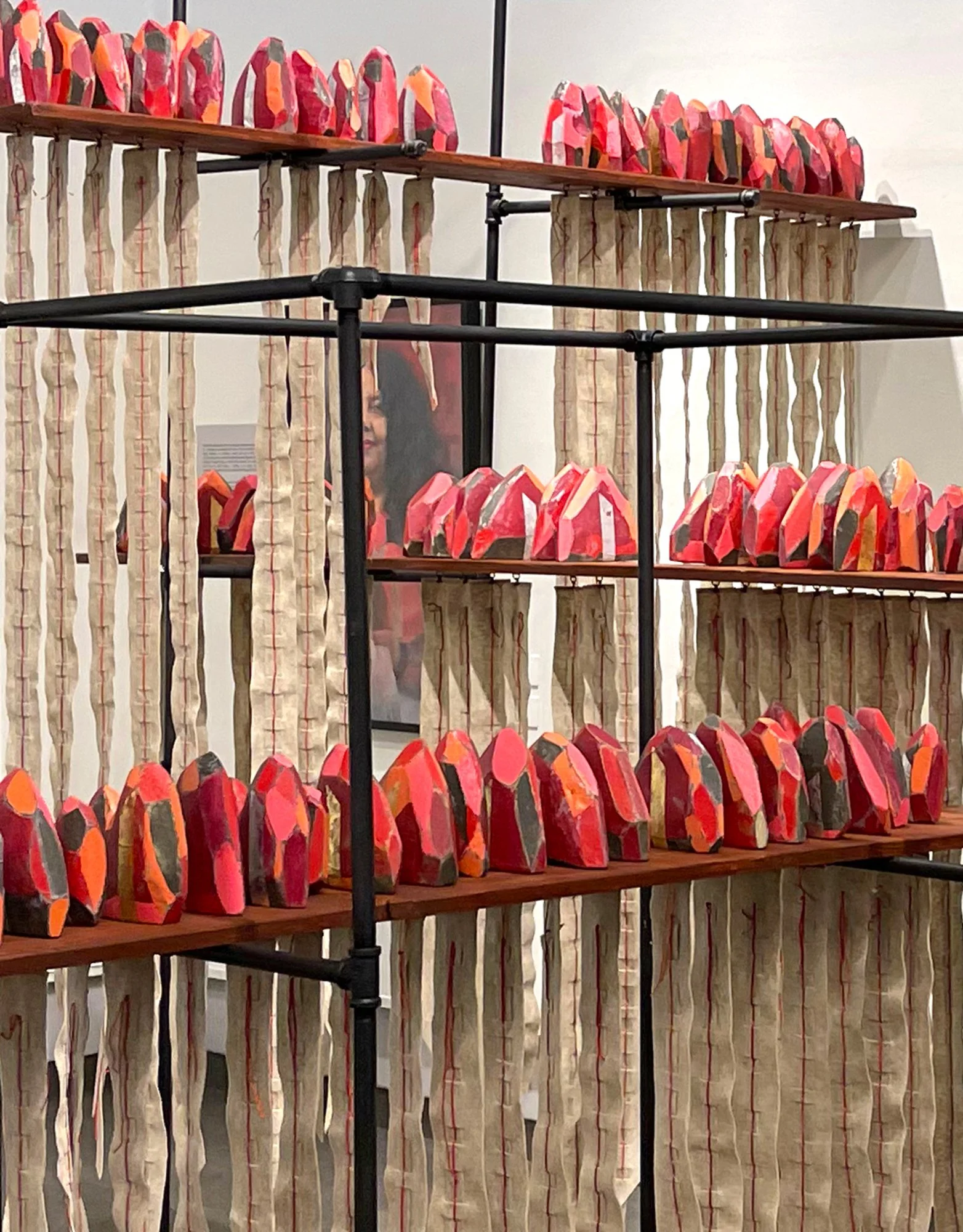
Esther and Her Work: Women and Incarceration
detail